
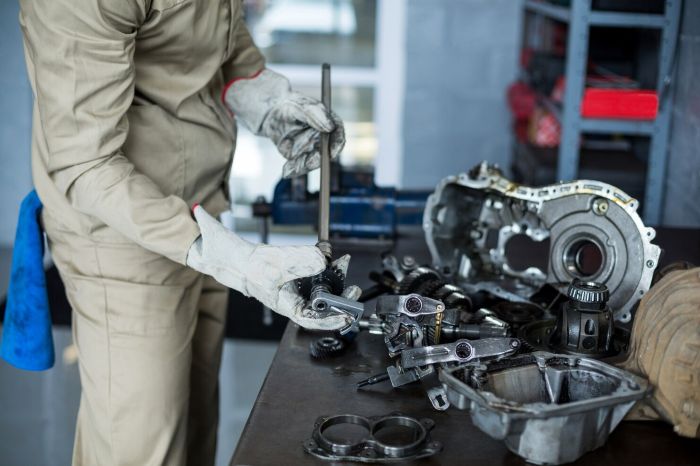
Thailand’s auto industry has deep roots. Rayong, Chonburi, Samut Prakan, and Ayutthaya host assembly plants and a dense network of tier-one, tier-two, and tier-three suppliers. Buyers looking for a new parts supplier here often find that the larger names are already committed to their main customers, which leaves the smaller tiers. That’s where a factory audit in Thailand earns its fee, since the smaller suppliers vary widely in how well they run.
Begin with certification. Most serious automotive suppliers hold IATF 16949, the quality management standard for the industry. Ask for the certificate, check the issuing body, and look at the scope. A certificate that covers machining doesn’t cover a stamping line that was added later. Check the expiry date and whether the last surveillance audit raised any major nonconformities. A supplier who is certified but whose scope doesn’t match the part you’re buying isn’t certified for your part.
Certification is a starting point. The audit itself should follow the part through the plant. Pick one component from your order and ask to see its control plan, process flow diagram, and failure mode analysis. These three documents should tell the same story. If the control plan calls for checking a bore diameter every hour and the floor operator can’t show you the last three measurements, the paperwork is decoration.
Measurement is where many plants weaken. Gauges and calipers need calibration records, and the calibration interval should be followed. Look at gauge R&R studies for critical dimensions, which show whether the measuring system is accurate enough to tell good parts from bad ones. A gauge that varies by half the tolerance can’t be trusted to sort anything.
Traceability matters when something goes wrong. Ask the plant to trace a finished lot back to the raw material heat number or batch and forward to the customer shipment. A good system does this in minutes. A poor one takes hours and ends in a guess. In a recall, the difference decides whether you pull one pallet or a whole month of output.
In-process inspection and production part approval records show how the plant launches new parts. Read a recent one. Check that dimensional results are complete, that material certifications are attached, and that approvals were signed before mass production began. Plants that skip steps here tend to skip them elsewhere.
Labor documentation requires care. Thai factories rely on a mix of Thai and migrant workers, many from Myanmar, Cambodia, and Laos. The audit should confirm that every worker has valid work authorisation, receives at least the legal minimum wage, and works within permitted hours. This is also where interviews help, since a worker can explain how overtime is recorded and paid. Mismatches between what workers say and what the ledger shows are the most common social compliance finding in the region.
Check the factory licence, which in Thailand is issued by the Department of Industrial Works. It specifies the permitted activities and the machinery registered. A plant running a process or an extra line that isn’t covered has a regulatory risk that can lead to a stop-work order. Fire safety, chemical storage, and waste handling round out the site review.
Providers such as InspectionService.com can pair an auditor with automotive experience for this kind of review, and follow it with a part-level inspection once production starts. That sequence, audit first and inspect second, gives you both the system and the output.
Ask about corrective action history as well. Request the last three customer complaints and the 8D reports or equivalent that followed. A strong supplier can show the root cause, the containment action, and the evidence that the fix held. A weak one offers a verbal account and a promise. Complaint handling is one of the clearest indicators of how a plant behaves under stress, and complaints are inevitable in automotive supply. Also look at scrap and rework rates for the part. Plants that track them and can explain the trend are usually in control. Plants that don’t know the numbers are guessing.
Last, ask what percentage of the plant’s capacity your order would take. A supplier that would double its output for you may struggle, and the audit is the best moment to find that out.